Palm · Aroid
Monstera
Monstera deliciosa, Monstera adansonii, Monstera pinnatipartita
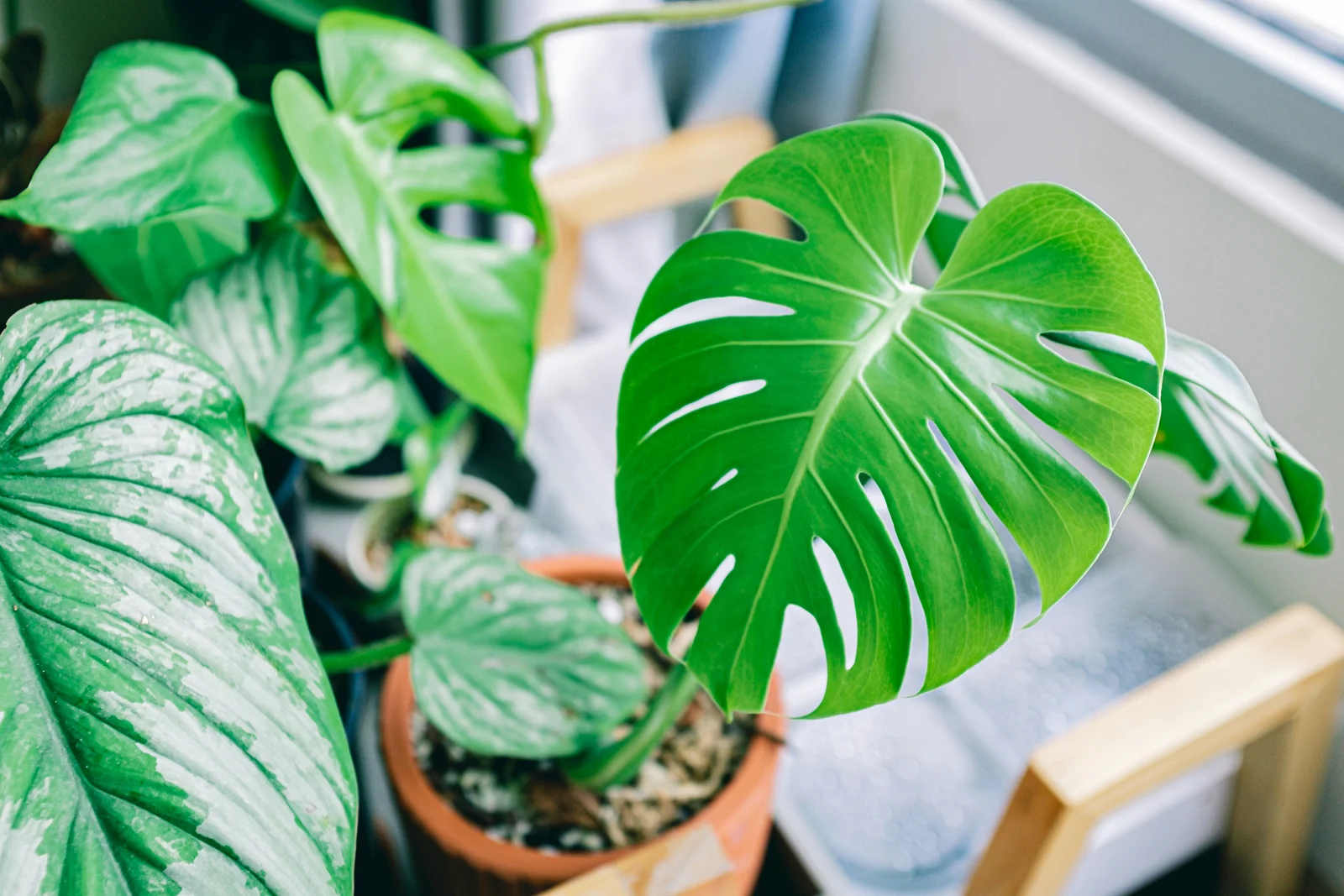
Monstera is a climbing tropical aroid native to the rainforests of southern Mexico and Central America, loved for its dramatic fenestrated leaves. Indoors it grows vigorously with a moss pole or support, rewarding owners with bigger, more split leaves as it matures. It tolerates a wide range of conditions, which is why it's one of the most popular statement houseplants.
The split-leaf icon — chaotic in the wild, forgiving at home.
Quick care
At a glance
- Light
- Bright indirect; tolerates medium
- Water
- Let top 2-3cm dry between waterings
- Humidity
- 50-70%
- Temperature
- 18-27°C
- Potting mix
- Chunky, well-draining aroid mix
- Toxicity
- Toxic to cats and dogs if chewed; mildly irritating to humans due to calcium oxalate crystals.
- Mature size
- 2-3m indoors with support
- Growth rate
- Fast
- Origin
- Southern Mexico and Central America
Where to start
The first things to learn
Care
Monstera is forgiving once you dial in bright indirect light, a chunky aroid mix, and watering only when the top 2-3cm of soil dries out. The most common mistakes are overwatering and low-light placement, both of which stunt leaf fenestration. Give it a moss pole and it will reward you with dramatically bigger leaves.
Watering
Water your Monstera when the top 2-3cm of soil feels dry — typically every 7-10 days in summer and less often in winter. Water thoroughly until it drains out the bottom, then empty the saucer. Droopy leaves that perk up after watering are a reliable thirst signal.
Light
Monstera thrives in bright, indirect light — think a couple of metres from a south or east window with a sheer curtain. It tolerates medium light but grows slowly and won't produce fenestrations. Direct midday sun scorches the leaves.
Every topic
More about monstera
Soil
3 articlesMonstera roots rot quickly in dense potting mix. Use a chunky aroid blend — roughly equal parts potting soil, orchid bark, perlite, and a handful of coco coir — to give roots the airflow they need. Regular potting soil on its own stays too wet.
Humidity
4 articlesMonstera prefers 50-70% humidity but copes with average household levels. Below 40% you may see crispy leaf edges; a humidifier or a pebble tray solves it. Grouping plants together also raises local humidity.
Temperature
5 articlesMonstera is happiest between 18-27°C and suffers below 10°C. Cold drafts, unheated rooms, and frosty windows cause blackened leaves and stunted growth. Keep it indoors year-round in any climate that dips below 12°C at night.
Fertilizer
7 articlesMonsteras are heavy feeders during spring and summer. A balanced liquid fertilizer (e.g. 20-20-20) diluted to half strength every 2-4 weeks keeps new leaves coming. Stop feeding in late autumn and winter when growth slows.
Repotting
5 articlesRepot Monstera every 1-2 years in spring, sizing up by just 2-5cm in diameter — too big a jump and the soil stays wet. Choose a pot with drainage holes and refresh it with chunky aroid mix. Expect a week or two of transplant shock.
Propagation
7 articlesMonstera propagates easily from stem cuttings taken just below a node — the bump where a leaf and aerial root emerge. Water propagation lets you watch roots develop but requires a transition to soil; direct-to-soil works too if humidity is high. Spring and early summer give the fastest results.
- Can Monstera cuttings go straight into soil?
- Is it better to propagate Monstera in water or soil?
- Is October too late to take Monstera cuttings?
- What are the common mistakes in Monstera propagation?
- What is the most successful Monstera propagation method?
- What's the best time of year to propagate Monstera?
- Where do I cut Monstera for propagation?
Pruning
6 articlesPrune Monstera to control size, encourage bushier growth, or harvest cuttings to propagate. Cut just above a node with a clean, sharp blade; the plant will push new growth from below the cut. Avoid removing more than a third of the plant at once.
Pests
4 articlesSpider mites, thrips, and mealybugs are the usual suspects on Monstera. Catch them early by inspecting new leaves and leaf undersides weekly. Insecticidal soap or neem oil knocks down most infestations within a few applications.
Root Rot
5 articlesRoot rot is the number-one killer of Monstera, caused by staying wet too long. Signs include yellowing leaves, a musty smell, and mushy black roots. Catch it early: unpot, trim the rotten roots, and repot in fresh, airy mix.
Toxicity
7 articlesAll parts of the Monstera plant contain calcium oxalate crystals, which cause mouth and stomach irritation if chewed by pets or children. It is not life-threatening but can cause drooling, vomiting, and swelling. Keep out of reach of curious cats, dogs, and toddlers.
Types
5 articlesThe genus Monstera contains around 50 species, but only a handful are common houseplants — deliciosa, adansonii, pinnatipartita, and siltepecana. Sought-after variegated cultivars like Thai Constellation and Albo Variegata can fetch hundreds of euros. Mini Monstera (Rhaphidophora tetrasperma) is frequently mislabeled but is a separate genus.
Fruit
5 articlesMature Monstera deliciosa can produce an edible fruit that tastes like a mix of pineapple and banana — but only when fully ripe. Unripe fruit contains calcium oxalate crystals that cause painful mouth irritation. Indoor Monsteras rarely fruit without very bright light and years of growth.
Leaves
7 articlesHealthy Monstera leaves should be glossy, firm, and — once the plant matures — develop the iconic splits (fenestrations). Yellow leaves usually point to overwatering, brown crispy edges to low humidity, and a lack of fenestrations to insufficient light. New leaves appear every 4-6 weeks on a well-kept plant.
Support
5 articlesMonsteras are climbers, and without support they flop and grow smaller leaves. A moss pole, coir pole, or wooden plank lets aerial roots grip and triggers larger, more fenestrated foliage. Keep the pole damp for the best response.
Roots
5 articlesMonsteras have two kinds of roots: soil roots that feed the plant and aerial roots that climb and anchor. Aerial roots can be tucked into the pot, trained onto a moss pole, or left alone — but avoid cutting them unless they become a nuisance.
Growing
4 articlesA happy Monstera can push out a new leaf every 4-6 weeks in the growing season. Speed depends mostly on light — more bright indirect light equals faster growth. Warmth, a moss pole, and regular feeding round out the recipe.
Other questions