Flowering houseplant
Orchid
Phalaenopsis amabilis
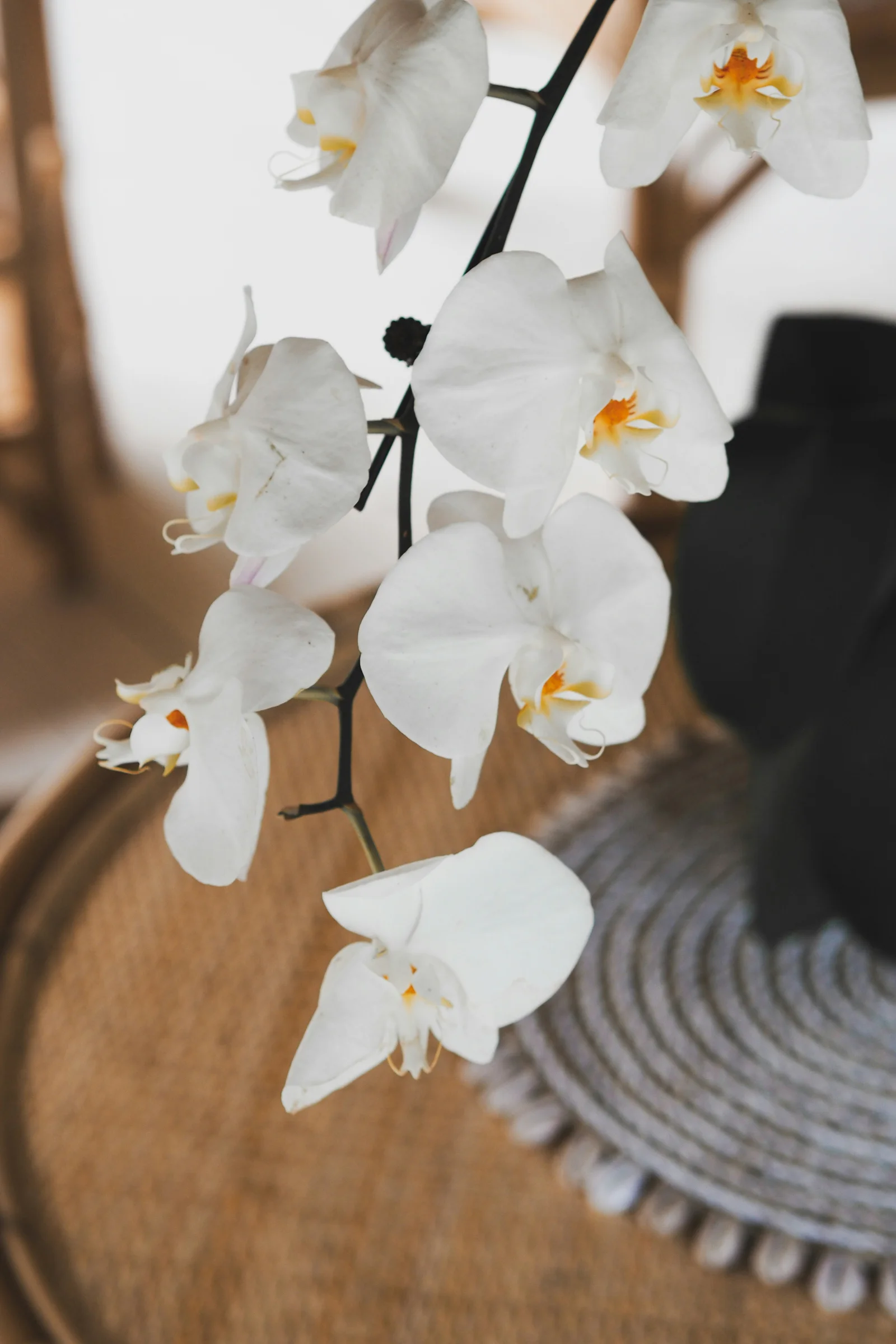
Orchids (most commonly the moth orchid, Phalaenopsis) are epiphytic tropical plants that grow on trees in their native Southeast Asian rainforests rather than in soil. Indoors they produce long-lasting flower spikes that can bloom for months at a time. With the right watering rhythm and bright indirect light they rebloom year after year.
A tree-dweller in disguise, easier than its reputation suggests.
Quick care
At a glance
- Light
- Bright indirect; east-facing window ideal
- Water
- Soak once a week, let roots dry
- Humidity
- 50-70%
- Temperature
- 18-27°C
- Potting mix
- Chunky orchid bark mix, never regular soil
- Toxicity
- Non-toxic to cats, dogs, and humans.
- Mature size
- 30-60cm tall including flower spike
- Growth rate
- Slow
- Origin
- Tropical Southeast Asia
Where to start
The first things to learn
Care
Orchid care comes down to bright indirect light, a weekly soak-and-drain watering, and chunky orchid bark instead of soil. The biggest mistakes are overwatering and planting in regular potting mix, which suffocates the roots. Done right, a Phalaenopsis lives and reblooms for decades.
Watering
Water Phalaenopsis orchids about once a week: soak the roots thoroughly, then let them drain completely. The roots should dry before the next watering; silver roots mean thirsty, green roots mean hydrated. Never let the pot sit in standing water.
Light
Phalaenopsis orchids want bright, indirect light; an east-facing window is ideal. Direct afternoon sun burns the leaves; too little light prevents reblooming. Healthy leaves are medium green; dark green means more light is needed, red-tinted means too much.
Every topic
More about orchid
Potting Mix
3 articlesOrchids are epiphytes and will suffocate in regular potting soil. Use a chunky orchid bark mix (sometimes with added sphagnum moss, charcoal, or perlite) that allows air to reach the roots. Fresh mix every 1-2 years keeps roots healthy.
Humidity
4 articlesPhalaenopsis orchids prefer 50-70% humidity but tolerate average household levels. A bathroom with a bright window is a great home for them. Above 80% humidity without airflow, though, invites fungal problems.
Temperature
6 articlesPhalaenopsis orchids prefer 18-27°C during the day with a 5-8°C drop at night, and that temperature dip is actually what triggers new flower spikes. Below 10°C causes permanent damage; frost is fatal. Keep them away from cold windowpanes in winter.
Fertilizer
8 articlesOrchids are light feeders. Use a balanced orchid-specific fertilizer at quarter to half strength: 'weakly, weekly' is the classic rule. Rotate to a bloom-booster (higher phosphorus) in late summer to encourage spike formation.
- Are coffee grounds a good fertilizer for orchids?
- Do coffee grounds help orchids bloom?
- How to fertilize an orchid indoors?
- Is Miracle-Gro fertilizer good for orchids?
- What do you feed an orchid to make it bloom?
- What is the best fertilizer for orchids?
- What is the best homemade orchid fertilizer?
- When should you not fertilize orchids?
Repotting
5 articlesRepot your orchid every 1-2 years, or whenever the bark breaks down into mush. Best time is right after flowering, before new root growth starts. Use fresh orchid bark and a clear slotted pot so you can monitor root health.
Propagation
5 articlesPhalaenopsis orchids can't be propagated from cuttings like most houseplants. Instead, look for keikis, baby plantlets that sometimes grow from flower spikes or the base. Once a keiki has its own roots, it can be gently separated and potted.
Pruning
3 articlesOnce your orchid finishes blooming, you can trim the spent spike. If it's still green, cut just above a lower node to encourage a rebloom from the same spike; if it's brown, cut it off at the base. Leaves should only be removed when fully yellow.
Pests
6 articlesOrchids are relatively pest-resistant indoors, but mealybugs, scale, and spider mites occasionally show up. Wipe affected leaves with a cotton swab dipped in rubbing alcohol, or spray with insecticidal soap. Cinnamon is a traditional remedy for cut or damaged tissue to prevent fungal infection.
Root Rot
5 articlesRoot rot is the leading cause of orchid death and is almost always caused by stale, broken-down bark or standing water. Mushy, hollow, blackened roots are the telltale sign. Catch it early, trim the bad roots, and repot in fresh bark. Most orchids pull through.
Toxicity
6 articlesPhalaenopsis orchids are non-toxic to cats, dogs, and humans, making them one of the safest flowering houseplants you can keep around pets and children. They're also safe for most reptiles. Only the chemicals used on supermarket orchids (not the plant itself) are worth a second thought.
Types
4 articlesThe orchid family has over 25,000 species, but only a handful are common houseplants: Phalaenopsis (moth orchid), Dendrobium, Cattleya, Oncidium, and Vanda. Phalaenopsis is by far the easiest and most widely sold. The others each have their own light and watering quirks.
Flowers
3 articlesA healthy Phalaenopsis bloom can last two to four months before the flowers drop, and that's normal, not a sign of failure. Flowers dropping early usually means temperature swings, underwatering, or ethylene exposure from nearby fruit. After blooming, the spike can be trimmed to encourage a rebloom.
Roots
4 articlesHealthy orchid roots are firm, plump, and bright green when wet (silver-grey when dry). Air roots poking out above the pot are perfectly normal; they absorb moisture from humidity. Only trim roots that are clearly mushy, black, or hollow.
Growing
4 articlesOrchids grow slowly but steadily. Expect 1-2 new leaves a year on a healthy Phalaenopsis. A drop of 5-8°C between day and night temperatures is what triggers new flower spikes. Patience is the single biggest requirement.
Leaves
5 articlesHealthy orchid leaves are firm, glossy, and medium green; limp or wrinkled leaves usually signal a root problem, not a leaf one. Yellowing on the lowest leaf is natural ageing; yellowing across multiple leaves points to overwatering or sunburn.
Indoor Care
4 articlesPhalaenopsis orchids do brilliantly indoors, and in fact that's how almost all of them are grown. Give them bright indirect light, room-temperature water on a weekly schedule, and average household humidity. Most household rooms suit them as long as the window is bright enough.
Reblooming
6 articlesGetting an orchid to rebloom is the reward for patient care. After the last flower drops, give the plant a cooler spot at night (around 15°C) for a few weeks to trigger a new spike. Cutting a still-green spike just above a lower node often prompts a secondary bloom within 2-3 months.
Dormancy
3 articlesAfter flowering, many orchids enter a rest period of 6-9 months where they put out new leaves and roots but no flowers. This isn't a problem; it's the plant building energy for the next bloom. Keep watering and feeding lightly during dormancy.
Rescue
3 articlesA dying orchid can often be saved: unpot it, trim away any mushy black roots, and repot in fresh bark. If there are no live roots left, a sphagnum moss 'sweatbox' can coax new roots over a few months. Most orchids are more resilient than they look.
Other questions