Flowering houseplant
Orchid
Phalaenopsis amabilis
Orchids (most commonly the moth orchid, Phalaenopsis) are epiphytic tropical plants that grow on trees in their native Southeast Asian rainforests rather than in soil. Indoors they produce long-lasting flower spikes that can bloom for months at a time. With the right watering rhythm and bright indirect light they rebloom year after year.
A tree-dweller in disguise, easier than its reputation suggests.
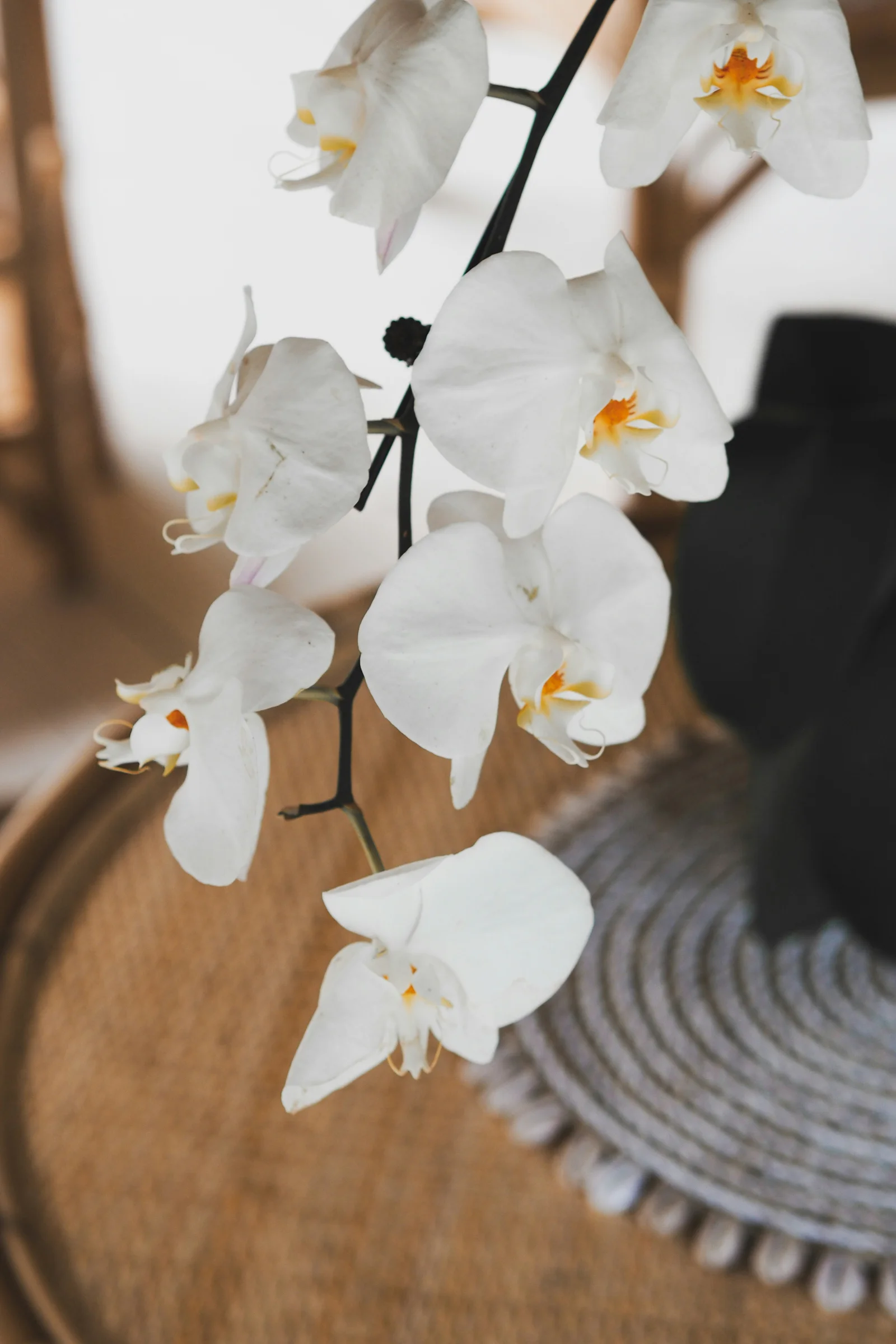
Quick care
At a glance
- Light
- Bright indirect; east-facing window ideal
- Water
- Soak once a week, let roots dry
- Humidity
- 50-70%
- Temperature
- 18-27°C
- Potting mix
- Chunky orchid bark mix, never regular soil
- Toxicity
- Non-toxic to cats, dogs, and humans.
- Mature size
- 30-60cm tall including flower spike
- Growth rate
- Slow
- Origin
- Tropical Southeast Asia
Where to start
The first things to learn
Care
Orchid care comes down to bright indirect light, a weekly soak-and-drain watering, and chunky orchid bark instead of soil. The biggest mistakes are overwatering and planting in regular potting mix, which suffocates the roots. Done right, a Phalaenopsis lives and reblooms for decades.
ReadDormancy
After flowering, many orchids enter a rest period of 6-9 months where they put out new leaves and roots but no flowers. This isn't a problem; it's the plant building energy for the next bloom. Keep watering and feeding lightly during dormancy.
ReadOther questions